Exterior House Painting in Portland and the Metro Area
What exterior painting involves
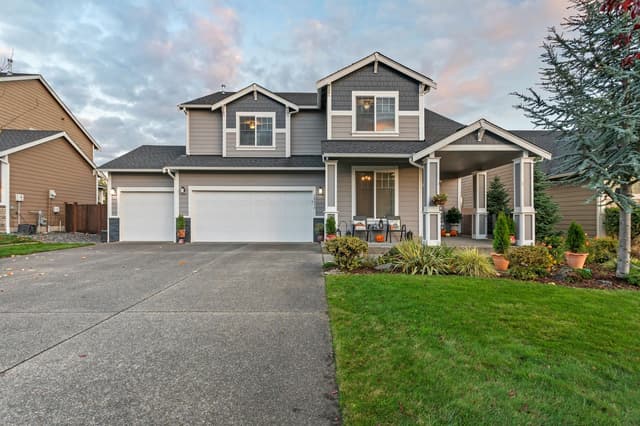
Exterior paint in the Portland metro has to survive long wet winters, moss and mildew on shaded walls, and strong UV on south and west walls in summer. Most early failures come from paint applied over dirty, damp, or peeling surfaces rather than from the paint itself.
The housing mix matters too. Inner Portland, Milwaukie, and Oregon City have many pre-1978 wood homes with decades of paint layers and lead-safe requirements. The west-side suburbs are mostly hardboard, T1-11, and fiber-cement homes from the 1970s onward, where sealing siding edges is the main job. Newer east-side and Clackamas County subdivisions are on their first or second repaint.
Common projects
- Full-house exterior repaint
- Siding only (lap, fiber-cement, hardboard, T1-11)
- Trim, fascia, soffits
- Doors, garages, gables
- Stucco repair and recoating
- Multi-color and color-change repaints
How a good exterior painting job is done
- 1
Wash and treat
Soft-wash or low-pressure wash to remove dirt, chalk, moss, and mildew, with a mildewcide on shaded walls. The wood then needs a day or more of dry weather.
- 2
Repair
Replace soft or rotted boards and trim, and set popped nails. On hardboard and T1-11, this is where swollen bottom edges get cut out.
- 3
Scrape and sand
Remove all loose paint and feather the edges so they do not telegraph through. On pre-1978 homes this happens under lead-safe containment.
- 4
Prime
Prime bare wood and any repairs with a primer suited to the substrate: oil or bonding primer on old wood, stain-blocking primer on cedar, masonry primer on stucco.
- 5
Caulk
Replace failed caulk at trim joints, window and door casings, and siding butt joints so wind-driven rain cannot get behind the paint.
- 6
Two finish coats
Apply two coats of a quality 100 percent acrylic, sprayed and back-rolled or brushed. One coat is the most common way cheap quotes cut cost.
What exterior painting costs
Typical Portland-metro ranges for a licensed painter doing standard prep and two coats of mid-grade acrylic. Heavy carpentry and full lead abatement are extra.
| Project | Typical range |
|---|---|
| 1-story ranch or bungalow, about 1,200 sq ft | $3,500 to $6,500 |
| 2-story home, 2,000 to 2,500 sq ft | $5,500 to $10,000 |
| 2-story Craftsman with detailed trim | $8,000 to $14,000 |
| 3-story or oversized home, 3,000+ sq ft | $10,000 to $20,000+ |
Lead-safe work on a pre-1978 home typically adds 15 to 30 percent.
What moves the price
House size and stories
Square footage of paintable surface is the largest single cost driver. Two-story homes add ladder and scaffolding time.
Substrate condition
Bare wood, peeling paint, soft boards, or moss take prep time. Bargain quotes that skip prep tend to fail within 2 to 3 years.
Paint product tier
Premium 100 percent acrylic exterior paints (Sherwin-Williams Emerald, Benjamin Moore Aura, or equivalents) cost more per gallon but typically last much longer than builder-grade product.
Number of colors
Each additional color (body, trim, accent, doors) adds masking, brush time, and cut-in labor.
Access
Steep grades, tall downhill elevations, and tight side yards change scaffolding setup and bid pricing.
Every painting price range on the site is in the Portland painting cost guide, and the cost calculator turns them into a range for your house. The long-form walkthrough is how much it costs to paint a house in Portland.
Paint problems exterior painting fixes
Start from what you are seeing. Each card explains the usual cause before it points at a fix.
- Peeling or Flaking PaintPaint lifting off siding or trim, usually where water gets behind it.What it means →
- Blisters or BubblesRaised bubbles in the paint film, from moisture or heat under the coat.What it means →
- Mildew, Algae or MossGray, black or green growth on shaded, damp walls and decks.What it means →
- Chalky or Faded PaintA powder that rubs off on your hand, or color gone flat on sunny walls.What it means →
Painting stucco in the Portland area
Stucco is common on 1980s through 2000s homes in Tualatin, Tigard, Happy Valley, and parts of Vancouver. Painting it is a different job from painting siding. Hairline cracks need an elastomeric patch, larger cracks and damaged areas need stucco repair first, and the finish should be a masonry-rated acrylic or elastomeric coating that lets moisture escape.
Breathability matters in a climate this wet. Stucco absorbs rain and has to dry back out through the coating. Masonry acrylics let water vapor pass easily. Elastomeric coatings go on much thicker and bridge hairline cracks, but they let less vapor through, so they suit sound walls with cracking problems better than walls that already show water getting behind the stucco. If you see staining, soft spots, or bulging, have the wall checked for moisture before anyone paints it.
Ask painters whether they will repair the cracks themselves or bring in a plasterer, which primer they use on patched areas, and whether they will spray and back-roll to fill the texture. A plain wall-paint recoat over cracked stucco usually shows the cracks again within a season.
Siding and trim repair before painting
Paint cannot fix wood that is already failing. Across the metro the usual trouble spots are the bottom edges of hardboard lap siding and T1-11 plywood panels, which swell and soften when water wicks in, and the trim around windows, door casings, sills, and fascia behind overflowing gutters, where rot starts. A good painter probes those areas during the estimate rather than discovering them mid-job.
Most painting contractors replace a few boards, trim pieces, or fascia sections themselves. When soft wood shows up across whole walls, or around structural framing, bring in a carpenter or siding contractor first and have the painter start after the repairs.
Either way, the quote should list repair work separately from painting, with a price per board or per hour for anything found after work starts. That keeps two quotes comparable and avoids surprise change orders.
Paint or replace the siding?
If most boards are sound and the problems are localized, replacing damaged boards and repainting costs a fraction of new siding. If swelling, delamination, or rot is spread across several walls, which happens with older hardboard and T1-11, paint will not fix it. Get a siding opinion before paying for prep on boards that need replacing.
If the boards are sound and the only question is whether the paint is worn out, check the signs in our guide to how long exterior paint lasts in Portland.
Questions to ask before you hire
- Will you soft-wash or pressure-wash first, and how long will you let it dry?
- How many finish coats are in the quote, and are you spot-priming or full-priming bare wood?
- Which paint product and line are you using?
- Are you spraying only, or spraying plus back-rolling?
- How will you handle moss, mildew, or rotted siding?
- Do you carry an active Oregon CCB license (or Washington L&I registration for Vancouver) and liability insurance?
- If my home is pre-1978, do you hold a lead-safe renovation license?
Exterior Painting FAQs
How much does exterior house painting cost in Portland?
Most Portland-metro exteriors cost $5,000 to $10,000. A single-story, 1,200 sq ft home usually runs $3,500 to $6,500, and a large or detailed two-story home can reach $14,000 or more.
How much does it cost to paint the exterior of a 2,000 sq ft house?
A two-story Portland-metro home of 2,000 to 2,500 sq ft usually costs $5,500 to $10,000 to paint outside. A two-story Craftsman with detailed trim can reach $8,000 to $14,000, and lead-safe work on a pre-1978 house typically adds 15 to 30 percent.
How long does an exterior repaint take?
Most homes take 3 to 7 working days. Prep is often the longest step, and weather delays are common in spring and fall.
When is the best time of year to paint outside in Portland?
Late May through September, when surfaces stay dry and nights stay mild. Book in late winter or early spring for the best choice of dates.
Can I paint over existing paint without scraping?
Only if the existing paint is fully adhered. Painting over peeling, blistered, or chalking paint just delays the failure.
How long does exterior paint last in the Portland area?
On wood siding, USDA Forest Products Laboratory estimates put a primer and two topcoats at about 6 to 15 years, depending on the wood and its surface. A primer with a single topcoat lasts about half as long, and sunny south and west walls wear out first.
Can stucco be painted?
Yes, once cracks are repaired. Use a masonry-rated or elastomeric coating that lets moisture escape, applied by spray and back-roll to fill the texture.
Related guides
- How Much Does It Cost to Paint a House in Portland, OR?
Real price ranges, local factors, and what actually moves the needle on your final quote.
- How to Prep Your Home for Exterior Painting
The prep steps that decide how long your paint job actually lasts.
- When Is the Best Time to Paint a House Exterior in Portland?
Why dry-season prep wins, and how to plan around Portland's weather.
- How Long Does Exterior Paint Last in Portland?
What USDA research says about paint life on each kind of siding, why sunny walls wear out first, and how to tell when your house is due.
Related services and tools
- ServiceDeck & Fence StainingCedar, pressure-treated, and composite deck and fence cleaning, staining, and sealing.
- ServiceLead-Safe Painting (Pre-1978)Certified lead-safe exterior and interior painting for homes built before 1978.
- GuidePainting Over Oil-Based Paint in Portland HomesHow to tell oil paint from latex, the two ways to make latex stick to it, and the lead rules that come first in a pre-1978 Portland house.
- GuidePainting Your House Before You Sell in PortlandWhich paint problems FHA appraisers, inspectors and buyers flag, the lead rules for pre-1978 homes, and what to repair, touch up or leave before you list.
- Free toolPainting bid checkerCheck a written estimate for the items Oregon and Washington require, and the scope it should name.
Exterior Painting by city
Other services
Ready for a Real Number?
Describe your project. Sending a request is free and carries no obligation. Before you hire anyone, check the license: Oregon CCB, or Washington L&I across the river.